http://upload.wikimedia.org/wikipedia/commons/thumb/1/11/Mehterhane.jpg/350px-Mehterhane.jpg
Turkish finale - The Abduction from the Seraglio (Die Entführung aus dem Serail), 1782 by Wolfgang Amadeus Mozart ACT III Finale:Turkish Janissary band is singing to praise The Pasha for a change. He, at least, turned out noble and generous in the end. 莫札特歌劇"後宮的誘逃“最終章,讚美國王The Pasha的寬大仁慈
Janissary music was the inspiration to Mozart making turkish style. It's especially when oriental flavor did being popular in 18th-century European society. Ottoman military bands are thought to be the oldest kind of military marching band. The music was for military on wars, special days and the presence of khans (supreme rulers of turkish tribes; “Tuğ” Türk XI. century). In Ottoman, the band was generally known as mehterân (مهتران), though those bands used in the retinue of a vizier or prince were generally known as mehterhane (مهترخانه, meaning roughly, "a gathering of mehters"). In modern Turkish, the band is often termed mehter takımı "mehter team". In the West, the band's music is also often called Janissary music because the janissaries formed the core of the bands.

Friday, January 25, 2013

light in art history

Jacopo Tintoretto
The Last Supper
1592-94, Oil on canvas, 365 x 568 cm
San Giorgio Maggiore, Venice

Light, in both its form-defining and symbolic functions, remained central to the increasingly dramatic naturalism of Venetian painting, never losing its character as the carrier of divine significance that was its special role in the history of Christian art. And to this continuing tradition - which runs from the golden mosaics of Byzantium through the windows of the Gothic cathedrals and the subtle pictorial explorations of the early Flemish masters to the profound radiance of Rembrandt - Titian contributed, literally, a new dimension.


Jan van Eyck had explored the suggestive world of religious symbolism and poetic metaphor but, simultaneously and as part of the same creative impulse, he explored and expanded the limits, expressive and formal, of his own art of painting.3 Indeed, in the art of Jan van Eyck the worlds are mutually dependent. The visual realization of the imagery of light occurred within the technical context of the development of the oil medium, a development that not only made possible the new pictorial iconography but that in turn surely received inspiration from the demands that iconography made upon the painter's imagination. The iconography of light became a function of the oil medium, and it is not surprising that the later development of oil painting continued to inspire painters to investigate the expressive potential of light - and of its inevitable corollary, shadow. Light assumes a particularly full and supple role in the art of Titian, distant but definite heir to the Eyckian heritage as well as to the more immediate models of Giovanni Bellini and Giorgione.

The best survey of light in art history remains in Wolfgang Schone's Uber das Licht in der Malerei, Berlin, 1954. For particular aspects of the tradition, see the useful essay by John Beckwith, "Byzantium: Gold and Light," in Light in Art, ed. Thomas B. Hess and John Ashbery (New York and London, 1971), pp. 67–81, and especially Erwin Panofsky, "Abbot Suger of St. Denis," in his Meaning in the Visual Arts (Garden City, N.Y., 1957), pp. 108–154, and Otto von Simson, The Gothic Cathedral (New York, 1962), pp. 50–58 and passim; also Hans Peter l'Orange, "Lux aeterna: l'adorazione della luce nell'arte tardo-antica ed alto-medioevale," Atti della Pontificia Accademia romana di archeologia, Rendiconti 47 (1974–1975): 191–202. For the later development of the theme, in addition to Meiss, "Light as Form and Symbol," see Jan Bialostocki, "Ars auro prior," in Mélanges de littérature et de philologie offerts à Mieczyslaw Brahmer (Warsaw, 1996), pp. 55–63, and E. H. Gombrich, "Light, Form and Texture in XVth Century Painting," Journal of the Royal Society of Arts 112 (1964): 826–849 (repr. as "Light, Form and Texture in Fifteenth-Century Painting North and South of the Alps," in his The Heritage of Apelles [Ithaca, 1976], pp. 19–35). And see especially the suggestive study by John Gage, "Colour in History: Relative and Absolute," Art History I (1978): 104–130, and his larger survey, Color and Culture: Practice and Meaning from Antiquity to Abstraction (Boston, Toronto, London, 1993). Matters of color are treated on a more prosaic level by Paul Hills, The Light of Early Italian Painting (New Haven and London, 1987).

Millard Meiss's essay on "Light as Form and Symbol"


  • David Rosand, Titian's Light as Form and Symbol, in: The Art Bulletin 57, N. 1, 1975, pp. 58-64

Venetian Painting in the Later Sixteenth Century

By the middle of the sixteenth century, a new generation of painters began to challenge Titian's dominance over Venetian art. The three most important artists to do so were Tintoretto, Veronese, and Jacopo Bassano. While all three painters were influenced by the older master's rich color and painterly brushwork, each developed his own, individual style. A gifted portraitist, Tintoretto is also known for his unusual interpretations of religious subjects. His dramatic use of color and light often cause him to be considered a precursor to the baroque style of the next century. Veronese painted ambitious decorative cycles and is perhaps best known for his large scenes of feasts or banquets. In contrast to the material splendor and operatic compositions of Veronese's work, Bassano's paintings quietly display his greater interest in landscape and pastoral themes.

To reassert Catholic doctrine and strengthen the faith of worshipers, Counter Reformation artists emphasized the role of the saints and sacraments in scenes that involved viewers on a personal, emotional level.

The son of a cloth dyer (tintore), Jacopo Robusti, later called Tintoretto, was born in Venice, where he lived and worked for most of his life. Details of his artistic training are not known, although his early works show the influence of Titian.


National Gallery of Art, Washington, DC

Jacopo Tintoretto

Jacopo Tintoretto Also known as Jacopo Robusti Italian, 1518 - 1594


Life and work:

  • Before 1548
  • 1548–1555
  • 1556–1574
  • 1575 and after
  • Scuola Grande di San Marco
  • Scuola Grande di San Rocco

Working methods and technique
Character and personality
Critical reception and posthumous reputation


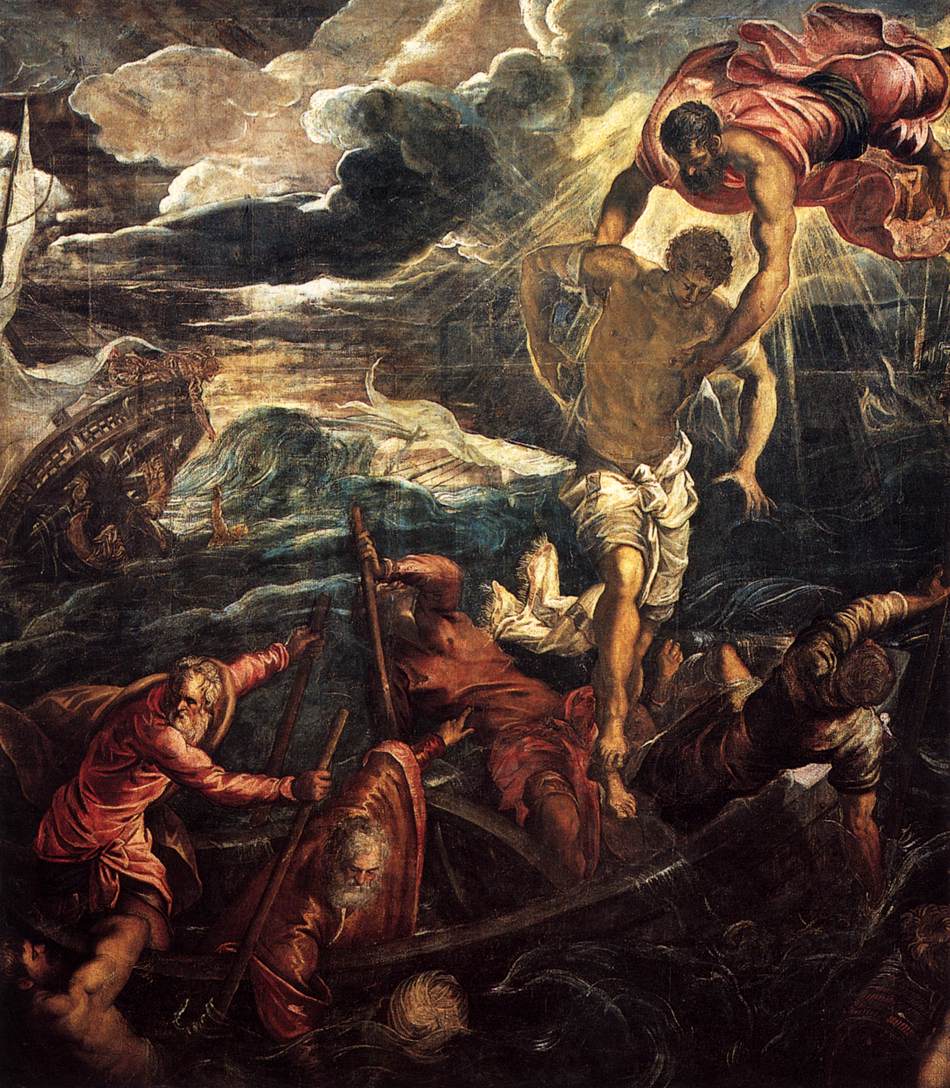
St Mark Rescuing a Saracen from Shipwreck

Jacopo Tintoretto
St Mark Rescuing a Saracen from Shipwreck
1562-66, Oil on canvas, 398 x 337 cm
Gallerie dell'Accademia, Venice

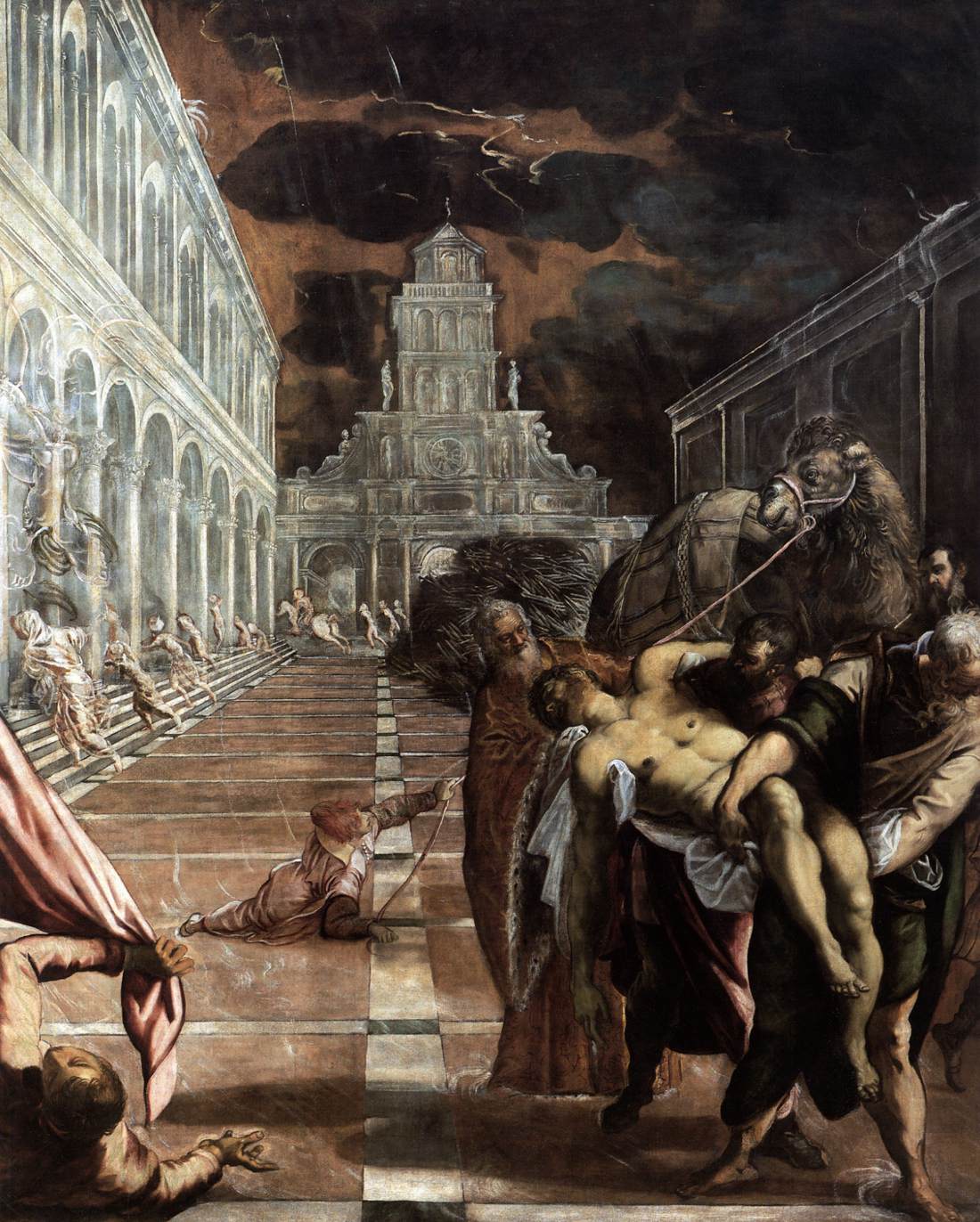
Removal of the Body of St Mark

Jacopo Tintoretto
Removal of the Body of St Mark
1562-66, Oil on canvas, 398 x 315 cm
Gallerie dell'Accademia, Venice

Finding of the Body of St Mark

Jacopo Tintoretto
Finding of the Body of St Mark
1562-66, Oil on canvas, 396 x 400 cm
Pinacoteca di Brera, Milan

The Miracle of St Mark Rescuing the Slave

Jacopo Tintoretto
The Miracle of St Mark Rescuing the Slave
1548, oil on canvas, 416 × 544 cm
Galleria dell’Accademia, Venice

主題是 St Mark的一個神蹟故事,而St Mark是威尼斯重要的守護聖徒(Patron Saint)。一位騎士(a knight of Provence)的僕人是虔誠信徒,前往敬拜St Mark的聖遺骸(the relics of the saint);然而身為主人的騎士不認同這個信仰,禁止這崇拜行為,惱怒僕人已經違抗命令。於是下令懲罰,要砍斷僕人的雙腳和剝除他的兩個眼睛。依據Jacobus de Voragine的黃金傳說(Golden Legend, the 13th century),就在懲罰行刑進行中,St Mark奇蹟式的顯靈,發出神蹟讓砍腳的斧頭柄和刺雙眼的木條一一斷裂,僕人的身體受到保護沒有任何傷害,現場的士兵、護衛和群眾看到這個神蹟,全部人都驚異地目瞪口呆。

Tintoretto在這幅作品的的畫面處理,在構圖部份就像是舞台配置一樣,古典建築的場景前面,人群聚集地圍繞著中央的事件主題,聚集的人物與人物緊貼著,每個人都有不同動態的肢勢,有驅著身體,有的伸長手臂,頭戴白色頭巾(Turban)的侍衛高舉展示那意外斷柄的斧頭,而人物臉上的表情大部份都異常沈靜。肢勢與表情的不一致,在畫面中不但沒有消抹奇蹟發生時一瞬間的激動,還增添一股肅穆的神聖。畫面上方從天而降的就是發出神蹟的St Mark,頭部屏發出的光芒不僅是施展出的神奇力量,也同時照亮了現場四周的環境。頭下腳上前縮降下的身體,好像是從畫面前方進入到畫面裡面一樣。這樣的描繪方式讓畫面裡的場景,更像是立體的真實影像,我們在畫面前方不知不覺也進入了故事場景裡面,就好像和所有人物一起親臨現場一般。


Sunday, January 20, 2013

The Camino de Santiago

The Camino de Santiago是那超過一千年歷史,許多不同背景與信仰的朝聖者走過的聖地亞哥朝聖之路。朝聖者通常從家門口出發,徒步完成,因此四面八方,可有許多各種不同路線。傳統上最普遍的路徑全長約八百公里,從Pyrenees Mountains法國邊境的 St. Jean Pied de Port開始,越過山脈沿著西班牙北部,走過許多的村莊後,抵達Santiago de Compostela的主教堂。到達那裡的任何一天中午Santiago de Compostela主教堂都會主持朝聖彌撒以供朝聖者參與。今日朝聖路上,沿途皆有黃色箭頭標示方向,每隔大約20到24公里可抵一個村落,有許多小旅社、驛站、或休憩站,供有各種地方飲食和床鋪過夜休息,全程總共約六到八週可完成旅途抵達目的地。


Pilgrims walk the Camino for various reasons. Some to seek penance, others enlightenment, and still others for a sense of adventure, yet all progress toward the Cathedral in Santiago where it is believed the remains of the apostle St. James are held. Most pilgrims choose to carry a scallop shell with them to symbolize their journey in honor of St. James. According to legend, scallop shells are said the have covered St. James’ body after it was found on the shores of the Galician coast. Another, perhaps more useful symbol is a walking stick to aid a weary pilgrim on his or her journey. Most pilgrims also carry a document called the credencial, purchased for a few euros from a Spanish tourist agency, a church on the route or from their church back home. The credencial is a pass which gives access to inexpensive, sometimes free, overnight accommodation in refugios along the trail. Also known as the "pilgrim's passport", the credencial is stamped with the official St. James stamp of each town or refugio at which the pilgrim has stayed. It provides walking pilgrims with a record of where they ate or slept, but also serves as proof to the Pilgrim's Office in Santiago that the journey is accomplished according to an official route. The credencial is available at refugios, tourist offices, some local parish houses, and outside Spain, through the national St. James organisation of that country. The stamped credencial is also necessary if the pilgrim wants to obtain a compostela, a certificate of completion of the pilgrimage. Regardless of whether a pilgrim’s journey begins for religious, spiritual or cultural reasons, the meditative nature of the Camino offers the perfect landscape in which to dedicate contemplation. Pilgrims follow the path amidst the villages, towns, rivers, mountains and fertile valleys that have changed the lives of millions of pilgrims who walked before them.

Saturday, January 19, 2013

Tintoretto's four paintings in the Scuola Grande di San Marco

Scuola Grande di San Marco, Venice, was one of the six grand scuole or confraternities that had an important presence in Venetian religious and cultural life. Founded in 1260 for religious and humanitarian purposes, it originally housed in a Gothic building that burned to the ground in 1485. The rebuild was designed in 1488 by architect Pietro Lombardo and Mauro Codussi, who completed the second half of the façade from 1490-1495. Now the building occupies a prominent spot facing the Campo San Giovanni e Paolo.

In 1488 the Lombardo workshop began work on the new building, and by 1490 the lower portion of the façade was completed. Rich with representations of saints, virtues, angels, warriors, winged lions, and fantastical creatures, the façade promoted the various philanthropic activities of the confraternity. Two sculptural elements were salvaged from the Scuola’s earlier building and reused in the new façade: the figure of Charity was placed above the portal, and a relief of Saint Mark Venerated by Members of the Confraternity was inserted in the lunette below. The virtue of Charity was one of the most important icons on the façade, as it depicted one of the main functions of the confraternity: love for God and love for others through divine and human interaction. The extensive Lombardo workshop made the remaining sculptural decoration on the lower part of the façade. Two notable reliefs by Tullio Lombardo, The Miracle of Saint Mark Healing the Hand of the Shoemaker Anianus and The Baptism of Anianus, flank the secondary portal. The reliefs depict episodes in the life of Saint Mark, set in an interesting false perspective view of the arcades of Alexandria.

The Scuola Grande di San Marco was suppressed by Napoleonic decree after the fall of the Venetian Republic in 1797. The Scuola, along with the adjacent Hospital of San Lazzaro dei Mendicanti and the Dominican convent of SS. Giovanni e Paolo, was transformed into a military hospital in 1808. By 1819 it had become the civic hospital of Venice, as it remains today.

Tintoretto's four paintings in the Scuola Grande di San Marco

The walls of the Chapter Hall of the Scuola Grande di San Marco were once adorned with pictures by Tintoretto (later his son Domenico). The Miracle of St Mark Rescuing the Slave, which was installed on the wall of the Chapter Hall in April 1548, is now in the Gallerie dell'Accademia, Venice. The later three-part cycle representing miracles worked posthumously by St Mark, commissioned from Tintoretto in 1562 is now in the Gallerie dell'Accademi in Venice and Pinacoteca di Brera, Milan.


Jacopo Tintoretto,
The Miracle of St Mark Rescuing the Slave,
1548, Oil on canvas, 415 x 541 cm,
Gallerie dell'Accademia, Venice


info:  
  1. www.savevenice.org
  2. www.wga.hu

Wednesday, May 19, 2010

https://blogger.googleusercontent.com/img/b/R29vZ2xl/AVvXsEjMruvdn5n7uPouzWHnn-2Q5UvhIQAmI8ONCnM8RPGcnUMjFiqX6v58oHhhNcA-BAI9KWAjAQCbrWnQikL2NsxPvtTvRbTe_n9snqO_HlaXC5eUi9WxTg0YFw8KRmk1ytY2FfAc97BvsYvE/

Friday, February 12, 2010

Jacques Callot

這裡描繪著十七世紀時,因為宗教戰爭戰敗而被吊死在樹上的人。十七世紀的歐洲大陸,因為新教與天主教會的對立,引起了三十年戰爭Thirty Years' War (1618–1648),過程非常慘烈,整個改變了後來歐洲的政治版圖。而法國藝術家Jacques Callot(ce 1592–1635)製作了一系列共十八張圖案的版畫 — “戰爭的慘烈”Les Grandes Misères de la guerre (The Large Miseries of War),印刷術的逐漸發達,Jacques Callot精巧的把親身經歷過的事件,一一描繪下來,控訴著軍隊的殘酷罪行;這些軍隊藉由戰爭的侵犯,四處掠奪,帶來了貧窮與徹底的毀壞。吊死人的樹底下的文字 — Jacques Callot寫著:這些敗壞可惡的強盜,最後全部在樹上吊死;就好像樹上長出了不幸的果實,再沒多久他們也還要接受天國的審判。這系列是歷史上第一部反戰的藝術作品。

Jacques Callot(ce 1592–1635)十七世紀在法國與尼德蘭地區,專長印刷製版,尤其是小尺寸方便印刷發行的圖版;圖案內容通常與當時實際發生的事件有關。

Saturday, January 9, 2010

Paul Cezanne


https://blogger.googleusercontent.com/img/b/R29vZ2xl/AVvXsEislAc3UxZXGTpK2E0MNms1fQKdvOks0N7U5KHTxzt8XAf29KZj0LYfGAzB1TKtLaJVcO321-D-Aeqt2umaU6G4QBJ-MdWdnJOl36V4evk-symH3T8WvotyL0l4DMAK-3_vxx8k7ckL0o5I/Paul Cezanne保羅塞尚
  1. 偏向主觀的表達方式,亦即以情緒性、情感性的表達方式,是富於直覺的創意性質,可是時常缺少具實的深度,淪為各種類型態狀的浪漫表達。age before 30s
  2. 偏向客觀的表達方式,亦即一種方法性的表達方式,富於合理的邏輯性質,但時常缺少一種自由的活動力,譬如各種寫實、風景的表現。age around 40s
  3. 無所偏向的統合表達方式,亦即一種真正成熟的表達方式,具有創意的自由性,但又不失具實的深刻表現,它是毎一個時代中真正成熟的表達典型,Classic古典的。塞尚五十歲以後其作品達到的巔峰境界。
主觀的情感表達,客觀的寫實,透過了情感與寫實方法的兩個過程,最後獲致的統合表達,其實就是所謂的古典,一種古典精神的藝術。Classic。真正的統合,即一種整體性的人性與自然性的具體呈現。現代主義的繪畫常缺少的一個質素,也常常是現代心靈所缺少的一種非常重要的人性成熟質素。以塞尚的繪畫歷程來描述,其風格歷程,一開始追求真正存在的實質情感,後來逐漸用具體的寫實表達呈現實質的情感,最後以成熟的方法來完成或逼近不可能表達的存在實體的表達,作最完善的統合調配來完成心中的繪畫目的。

塞尚終其一生所追求的,無非是一種感覺的真實。假如要真正的了解塞尚所謂感覺、感覺的真實其再現於畫面上的方法,就必須先了解他所謂的實現realization,即“成為事物其本身“to become the thing itself的意思。這是現代主義風格裡,純觀念或抽象繪畫的起始,只是在塞尚當時藝術那種純自我風格觀念的繪畫尚未型成,但卻影響了後來立體、抽象等現代主義的形式。 繪畫過程中將人的感覺更進一步地從自然物象實體之中解放開來。繪畫是一種更自由的純主觀表達。換句話說,假如外在事物只是一種物象,對藝術而言並不值得拿來加以描述;相反地,假如在物象實體的背後,具有一實質的意義或世界存在,那人若能夠從物象的世界之中解放出來,才可能獲得真實意義的實現。果真如此,一切現象之物都可為藝術所取,本體、實質或義意,都在追尋的可能之中。延伸而來的整個現代風潮,可以說是人類表達在由繪畫開始的“方法探討“。杜象的觀念藝術或蒙德里安的空間,都是一種對於藝術某一種方法的可能與探索。塞尚以外在實質的物象來節制自身中過分擴張的意像,變成他繪畫的一個方法。塞尚的影響力發生了對現代繪畫在方法上的領導性,卻在另一方面顯示了現代繪畫中精神的缺欠性,是不統合的,不符合古典精神。

塞尚說:自然的深度遠比它外在所呈現的,還要深刻得多。
也就是說塞尚自己在藝術中所要實現的感覺,當然不純粹是屬於自然現象的外在事物,而是一種遠比自然的外在呈現更深刻的事物。感覺實現理論。超越自身,超越感覺、現象或情感,追求世界一切的本體,是本質,是內在,是實體,是超越,是一種形而上要求的繪畫完成。在哲學裡形而上學的觀點,一個真正的藝術家,窮其畢生的努力,所不能描摹的內在感覺,就是生命自體。而一個生命自體的感覺,所真正要描摹的自然,其對象就是宇宙自體。自體對自體,或自體本身真正的發生與創造,此同時,生命與宇宙間一種真正內在的相遇與合一,是人窮盡了一切屬於人的可能,才得以真實而逼現的。塞尚真正的藝術,真正的感覺,真正的追求,是真正的逼向於本體世界的窮究不朽精神。

Friday, January 8, 2010

style

風格:在時代的推移中,繪畫風格本身會受到各種外在與內在的影響而表現出所謂的風格變化stylistic changes。時代風格periodic style指的是整個時代在其藝術上所反應的面貌,因其時代特徵periodic characteristics會在當時所有(包括不同派別)的作品中出現,它和一般較熟悉的個人風格personal style不同。大體上來說,時代風格指的是在構圖composition上所表現出的結構structure。一旦時間轉變,繪畫結構的模式也就自然地顯現出它在風格上的變化,亦即時代延續過程中所導致的結構變化。在任何一個時段中,除了藝術家們共同所反應出的時代風格外,毎個畫家都有他獨特的個人風格。而個人風格之能夠被欣賞、摹仿、假造的部份,多半皆是由該畫家作品中常見之大、小“母題“motifs的外貌及其“筆法“brush modes的形狀等的外表皮相;就好像是穿上與某為名人一樣的衣裝,弄個類似的髮型、姿勢以及說話的樣子,摹仿冒充他/她本人。要更深入地暸解某為畫家真正、內在的心靈,我們就必須要抓住其“心印“—這位藝術家的筆觸、用筆、用墨,那些無法抄襲的、具有自律性而不能被控制的生理因素,也就是該藝術家作品本身的最基本個人因素,就好比DNA。

研究風格的本質、差異即其變化的原因與過程,幾乎是藝術史學的基本工作。藝術史學者必須能從一張畫的結構方式中辨認出作品所屬的年代。而結構分析structural analysis在藝術史學上佔據極重要的地位。

一幅畫中物象與物象間彼此的互動關係,也會在時間延續的過程中顯現出清楚的變化,它是與結構學密切相關的研究方法,一般稱之為形態學morphology。

Art History?

  • 藝術史學的研究是在定義明確的藝術潮流、派別或風格中“變化“的本質,以及這些變化所扮演的歷史角色;同時,作為一種形式、結構與內容,藝術史學它也為因時而易的內在演變提供清楚的輪廓。
  • 將有趣而複雜的台灣藝術歷史加入到我們藝術史的知識體系中,是很恰當的。
  • 藝術史是藝術品本身的研究,並非故事、事件或評論的重複敘述。以繪畫為例,一篇藝術史的研究論文,必須包含著從各種方法論的角度上對畫作進行深度的分析,至於畫家傳記、歷史故事、印章與讚辭等則被置於較次要的地位,為參考與佐證。
  • 形成藝術史研究核心的是藝術史本身:它的結構、風格、技術與轉變,還包括了它在同時代作品中所具有的地位。
  • 大部份是一種視覺上、而非文字上的努力。
  • 藝術史研究中,那些去解釋文化互動過程中的多元化觀點是必需的。文化流動的影響力量。
  • 文化流動中,國際間,一個內在社會、政治、經濟或教育等各種現象。
  • 對歷史的充分了解,還必須具有前瞻性的視覺分析能力、對當代(各有關國家的)文化、社會史的充足知識,才能建構學術性的、強固的藝術史研究。
閩習台風—台灣美術研究論文選集1


    Wednesday, January 6, 2010

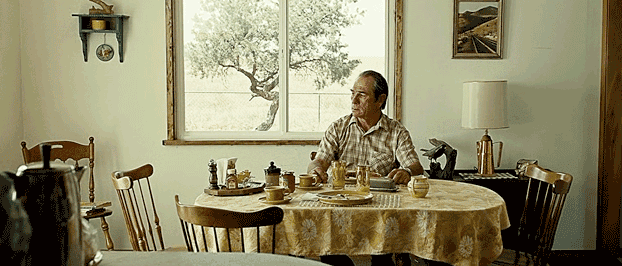
    No Country For Old Men

    是電影裡面,說:人,終究沒有了目標。

    男人,一個老男人的人生最後終究沒有了目標。No Country For Old Men(險路勿近),電影的故事裡面,湯米李瓊斯扮演的老警長,最後退休了,隱晦地吱吾出看透了的無奈。就像電影的原文片名,老男人沒地方可去,即使是偏遠的鄉下也不適合老男人。電影故事情節,一路而來是明白的說著無力、無奈、阻擋不了的人生河流,那麼的肯定;可是樂觀地,我寧願選擇質疑,偏廢不去認同。我不知道電影裡面的結論對我來說,終究是一時的呢?暫時完結的一個篇章?或是永永遠遠不變的道理?倒是,可以很肯定那些,警長的叔叔Ellis說的:這些在人生中來來去去的,都是一樣的,沒有甚麼是新的,你叔叔這樣,你爸爸這樣,你祖父也是這樣。或許我們曾經擁有一些信仰,相信最後虔誠地,神會來到身邊,可是到最後才發現祂終究沒有來,而此時,你卻也不再會責怪祂。

    我也沒有想過的課題,算是敲醒身為現代人的一個自大哱,睥睨老舊、過去的態度,總以為時代不斷的在進步,過去的就是落伍的,過時的,跟不上時代的是沒有價值的,只有先進的才是好的,一切都是過去未有,全新的。其實,對過去的那些種種,今日的也不過是跟昨日的差不多一樣罷了。說到此,倒不用積極的去盲目讚揚過去,只是人要絕不能自大的忽視過去的,歷史的;要記得,時間觀的軸線,沒有過去的曾經,走不到今日的現在。

    電影其實是空白的書頁,故事裡頭,毎個人不相同的人生經歷,各自解讀。期望難能可貴的一番道理,是經過了深思熟慮,能夠說服自己的那一種。 我做得到。美國,德州,西邊的大荒漠與公路。

    https://blogger.googleusercontent.com/img/b/R29vZ2xl/AVvXsEgQaH2IHrsdrwdidCWNnGnmgxwye1HomPJUkDXyO9UQsr0igWSlU2lGYSACeEwBUwMWzKtfrh-UVo2dRNYIlub8VwexS75WRbmFjwNv9Psr079zDX4wUI5pzUW5VlN_47gf9NZMPaRVXszf/

    Tuesday, December 22, 2009

    The blind side

    如果有機會在美國生活過一陣子,就能夠了解到美國人對於美式足球football的喜愛,美式足球超越任何種類的運動,比棒球或籃球更能夠代表美國文化,一位NFL美足運動員在社會上的身分地位是很高很讓人羨慕的,每年超級盃美式足球總冠軍比賽的轉播一定都是美國電視一年之中最高的收視率。美式足球在美國這麼重要,當然也是因為它十分受到歡迎,它除了運動本身激烈具爆炸性能量外,觀賞比賽、身為觀眾也很精彩,參與的觀眾接受了比賽的張力,會感到興奮緊張,進入球場好比盛大的宗教儀式,與自己的隊伍揮舞加油,狂熱的氣氛,對很多人來說產生多種不言可喻的安慰與滿足。美式足球:它所有的勝負都在分秒之間,球隊要能夠獲得一場比賽的勝利,球場上的毎個運動員都非常重要,美式足球講究的是團隊合作,有團隊的合作才能成就作戰策略與取得勝利,各種特徵又符合今日美國社會文化中人們(他們成功的)那些主要價值觀。我在美國生活之後,也變成美式足球迷了,很喜歡看美式足球的比賽,到現在有關美式足球的電視、影集、電影都會很關心,也會想辦法收看。

    The blind side“攻其不備“是一部與美式足球有關的電影,美國在今年感恩節時上映(感恩節收看美足比賽是美國人家庭中很重要的傳統),電影票房的表現非常的好,很多美國人在親友口碑相傳之下,紛紛都會到電影院裡面去看這部電影。The blind side“攻其不備“算是一部自傳性的勵志電影,但與傳統運動類型的電影不大一樣,著墨的故事情節,不是在球場上面,而是在運動員的身分背景裡面。看過這部電影,的確讓人感觸非常深刻,但這部電影有太多美國特有的文化、社會背景與傳統價值,如果不是美國人其實很難完整的產生連結與感動,我自己認真的把這部電影看了兩遍,會喜歡這部電影,卻沒有辦法有如同美國影評人筆下的那些文化上的共鳴和感受。這部電影在故事的前半部份與後端發展穿透了我的內心,他們描寫社會中為人的良善、人與人之間的愛、那些沒有絕對對或錯的信仰/價值觀是可貴不可抹滅的,也解釋了許多我在美國所看見的美國人家庭傳統與現代的美國社會文化。即是如此,我認為,要素是因為電影故事與內容,很能夠在許多美國人的內心產生回響,還描寫了美國人他/她生命中曾經過的一些感受,如此才會讓美國人多很喜愛這部電影,到處都有人談論這部電影,讓好口碑自然而然地傳布開來,並非常受到歡迎。

    電影中的主角不只是在運動員Michael Oher,還有幫助他、收養他的家庭Tuohy's family,尤其是珊卓布拉克Sandra Bullock所扮演的Tuohy太太。Michael Oher的出身非常糟糕、可憐,媽媽吸毒,藥物濫用,是怎麼生下這孩子的也說不清楚,更沒有能力撫養小孩,所以Michael從小就被社會福利機構強制安排到各個收養家庭。但小孩子的意識裡,母親終究是最親密的,對Michael來說小時候與母親拆散的那些強制行為,是從小最害怕的恐懼,也是最揮別不去的陰影。電影的故事是從Michael的高中時期開始,他長得相當高大,體格壯碩,比同年齡的孩子都大上兩倍,大家都叫他Big Mike,讀音像是Big Mac麥當勞的大麥克漢堡餐,聽起來就像是指他又肥膩而且很廉價,這讓Michael不喜歡人家叫他Big Mike。因緣際會,一個幫助Michael的黑人父親,為了讓自己的小孩能夠進入較好的學校,先找上學校的足球教練,希望教練在看上Michael體型的同時,也讓自己的孩子能夠一起進入該學校就讀。這個高中是一間基督教私立學校,通常是有錢保守的基督教徒,尤其是白人家庭的小孩才有機會就讀,Michael是順利進入這個學校了,但那黑人父親因為太太的生氣反對,不再收養Michael,Michael他很快的變成一個人街頭流浪,晚上沒有地方睡,只能在街頭的自助洗衣店裡,維持一點點的溫暖。感恩節的前一天晚上,天氣很冷,他穿著僅有的短袖短褲走在路上,而Tuohy一家人開車經過時停了下來,Tuohy太太看出Michael的困難,決定收容他,讓他到家裡住一個晚上。遇見Michael不是計畫中的事情,而Michael的安靜與禮貌,引起Tuohy太太對他背景的好奇。

    Tuohy's是標準的有錢人家,男主人Sean Tuohy在田納西州的曼菲斯Memphis, Tennessee擁有85間連鎖速食餐廳,女主人Leigh Anne Tuohy做室內裝潢與設計,一個女兒Collins與一個兒子SJ,他們的家豪華漂亮,並且非常溫暖。過夜之後的第二天早上,Michael整理好睡過的沙發,走了出去,Tuohy太太發現之後,很快的把他攔了下來,問他要去哪裡?Michael答不出來,又其實也沒有地方可去,Tuohy太太決定將他留下來,要他與她們家人一起過感恩節。又回到Tuohy家的房子裡去,感恩節裡Tuohy家的食物又多又豐盛,看在Michael的心裡十分衝擊又很羨慕,但他自己才不敢奢望什麼,對他來說自己連一個家庭都沒有,他默默的拿了食物到旁邊餐桌上靜靜地吃東西。Tuohy太太看著Michael,再看著Sean跟SJ緊盯著電視上的足球比賽,她把電視關了起來,把所有的食物都移到餐桌上,也把家裡的毎一個人集合到餐桌旁邊,對Tuohy太太來說全家人一起到餐桌前面,做誠心的禱告感謝老天爺所有慷慨的恩賜之後,再共同享用豐盛的食物;回到感恩節的宗教傳統,是Michael讓Tuohy家找回就快要遺失的感恩節真諦,讓家人了解到現有的富足並不是理所當然的,更不是世上毎一個人都能夠擁有的,富足的生活是應該要時時感恩,珍惜那一切的可貴。這天過後,Michael繼續留了下來,也從此留了下來與Tuohy家一起生活。

    Sunday, December 20, 2009

    Carmen Herrera


    Carmen Herrera at Ikon Gallery, Birmingham, UK

    Saturday, December 19, 2009

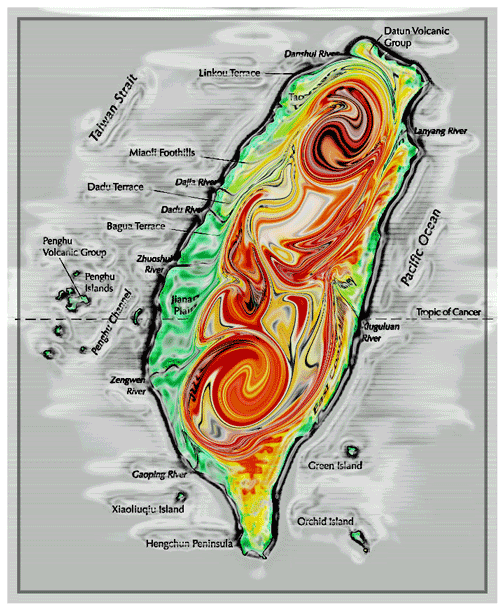
    earthquake today

    https://blogger.googleusercontent.com/img/b/R29vZ2xl/AVvXsEi4RbW1vDiiMkzd2QuzNOVkycRTQScEXkRdxiBWpKMaG5ETLlsN91z4ndzSmlW_SX7gyYo1d5Tdiw-lSj49vauRa0umcOzQYajIjP6xEnLydsc2WGA3KmpvSOg5U1xJX919gvRgPNEEj3Zd/Our other Islands
    Green Island and Orchid Island are two hilly, volcanic islands located off the Pacific coast of Taiwan. Green Island is situated 33 km east of Taiwan proper and has an area of approximately 16 sq. km. The island is also home to one of the world’s three saltwater hot springs, Zhaori Hot Spring. Orchid Island, which is inhabited by the indigenous Yami people and lies several tens of kilometers to the south of Green Island, has an area of 46 sq. km, making it Taiwan’s second-largest offshore island after Penghu. Coral reefs and abundant sea life fringe the coastlines of both islands.

    Sitting just off the southwest coast of Taiwan proper, Xiaoliuqiu is one of the largest coral islands in the world at 6.8 sq. km. The unique coral formations were created by eons of wind and rain erosion. Much of the coral is a brilliant crimson as it is composed primarily of iron and silicon oxides.  Taiwan maintains a historical claim to four groups of islands scattered over a vast area in the South China Sea. The groups are: the Dongsha (Pratas) Islands, Nansha (Spratly) Islands, Xisha (Paracel) Islands, and Zhongsha Islands (Macclesfield Bank). Currently, Taiwan’s effective jurisdiction includes the Dongsha Islands, and Taiping (Itu Aba) Island and Zhongzhou Reef of the Nansha Islands.

    The Dongsha Islands are located about 444 km southwest of Kaohsiung and comprise Dongsha Island and two coral reefs. Dongsha Island is a coral atoll with a land area of 2.38 sq. km. In addition to being a source of fish and minerals, the islands are also used by Taiwan as a naval outpost, and a hospital, a power station, a satellite tracking station, and a runway have all been built on Dongsha Island.

    The Nansha Islands consist of 180 islets, reefs, cays, and banks in an area extending 810 km from north to south and 900 km from east to west. Taiping Island, located 700 miles southwest of Kaohsiung, is the largest island in the group with an area of just 0.48 sq. km. The area has abundant fishing, mineral, and petroleum resources. The Nansha Islands have great strategic importance, and the Coast Guard Administration of the Executive Yuan stations personnel on Taiping Island.

    Lying about 170 km northeast of Taiwan proper is the Diaoyutai Archipelago, a tiny island group that includes Diaoyutai Island, Huangwei Islet, and Chiwei Islet.


    資料整理:
    • 蘭嶼和綠島,丘陵地形之火山島嶼,外沿皆有豐富的珊瑚礁環抱生長。 
    • 小琉球,世界最大的珊瑚礁島嶼之一,6.8平方公里。 
    • 中華民國歷史上宣誓的南中國海四群島,東沙群島、南沙群島、西沙群島、中沙群島;現中華民國行政管轄有東沙群島、太平島、南沙群島之中州礁。


      • 東沙群島,包含一個島嶼和兩個珊瑚礁,駐有海軍前哨、一個醫院、衛星站、機場跑道。
      • 南沙群島,180個小嶼、礁、沙洲、濱。
      • 太平島,是群島中最大的一個島嶼,其島嶼範圍是國內重要的漁場、有豐富的礦物資源、也有石油;同時也是重要的軍事指揮中心,有行政院海巡管理單位之人員佈署。


    • 釣魚台列島。
    臺灣本島
    極東  121度59分15秒    臺北縣貢寮鄉三貂角。
    極南  021度53分50秒    屏東縣恆春鎮鵝鑾鼻。
    極西  120度01分00秒    雲林縣口湖鄉外傘頂洲。
    極北  025度18分20秒    臺北縣石門鄉富貴角。

    澎湖群島、金門、馬祖。
      行政院新聞局國情:土地 
      The 2008 edition of  the Republic of China Yearbook

        Thursday, December 17, 2009

        Superflat

                Superflat 超級扁平,是今日的一種後現代藝術風格。已經看過對於這藝術風格的解釋了,但對於看著日本卡通、漫畫長大的我這一代,實在是蠻困難領略 Superflat 這由村上隆迎合西方去開創,又由西方銓釋標榜的命名。Superflat 超級扁平與日本豐富的電玩、卡漫文化有關;而我這一代有接觸的人,日本卡漫是一路成長中最重要的精神糧食,過去的很多時候進入漫畫裡的一切,好像已經是生活裡最扎實的信仰,讓人笑、讓人緊張、讓人期待、豐富了許多慘白無趣的平淡日子;國小的時候有“七龍珠“、“幽遊白書“,國中“蠟筆小新“、“灌籃高手“、“將太的壽司“,到了高中“去吧!稻中桌球社“,無一沒有未曾影響過自己的價值觀念,所以很難想像扁平與卡漫有關。

                回到藝術,Superflat 的命名最初是在2001年美國洛杉磯當代美術館MOCA的展覽,Takashi Murakami 村上隆(むらかみ たかし)等19位日本藝術家,作綜合的當代日本藝術作品展覽,該展覽就以 Superflat 作主題名稱。收集了八十年代與九十年代繪畫、攝影、數位影像、錄像裝置等等去檢視當代日本藝術的樣貌, 而所有這些作品中可以看出來,深受日本電玩、卡通、漫畫等,所謂御宅族文化的影響。 至於什麼是御宅族文化?有必要另外特別交代,御宅族:它是指在八、九十年代的日本社會裡那些熱衷、精通、具有豐富相關知識於卡通、漫畫、電玩的族群,其中有男有女。而吸引這些族群的卡通、漫畫、電玩遊戲在視覺上有著豐富的色彩與多變的造型,其中卡通造型不同於西方電影或漫畫的立體,是扁平的二維圖像,有著簡潔的構圖輪廓;而故事的內容卻千變萬化,在各式各樣的差異裡,都驚奇的像是神奇魔幻世界;角色展現出的情緒或態度被描寫、被刻劃的細膩精緻,也無論是在科幻的、寫實的、運動的、或歷史故事的卡漫都可以掌握住閱讀觀眾,並讓人熱衷於其間的想像世界,產生一種近乎是信仰的崇拜,又可以遠離那現實中充滿壓力的緊張生活。

                Superflat 算是由村上隆開創的,許多訪問與報導中,他自己說明了其藝術作品裡整合了日本卡通漫畫、通俗、流行時尚等文化,尤其是最重要的御宅族精神,並堅持認為想要表現的種種就是透過戰後日本御宅族特有的眼睛所分析而看見。御宅族的文化,表面上看起來像是脫離於現實世界,但其實在現實世界中它在日本創造了龐大的商業機會,在社會上影響著戰後日本新世代的人們,這些新世代族群架構出一股力量,產生對日本國內與文化多層面的當代影響,使日本與過去有所不同。這在藝術領域裡也滲透出來,由這些日本藝術家們的作品,具特有的觀點與想法,展現出來的就是 Superflat 超級扁平的藝術風格與特質。御宅族其中是有一個特質,就是由想像中去逃離現實,在現實中買賣渴求的想像;有御宅性格的藝術家發生類似的二元對立的疑議,這些 Superflat 超級扁平的藝術作品,是純粹的藝術表現或商業化攝影?是繪畫創作還是圖像的平面設計?手工雕塑還是工業成品?其實本來也都是藝術家腦中時常螢繞不去的煩惱,更不得不地揉雜混入創作裡去,展現了御宅的特質。作品裡專有的特色,是獨特文化背景下的創作;藝術家有形無形地在創作中反應出他們所在的文化背景,尤其是在完成的樣態裡,刻劃著時代與社會,這些作品於是就會具有藝術價值。Superflat 超級扁平的作品具有這一類的時代特質與其藝術價值。超級扁平由村上隆的作品展現而來的藝術非常流行並且受到歡迎。


        https://blogger.googleusercontent.com/img/b/R29vZ2xl/AVvXsEiLtYFODDGkhgqv-uXPTNqTs7-9UvYJ2l42lD71TLZU2stlWRZoyu0luzYjJRU7rTFPunEIEXcEkjHfvKhX4oglmotiAkHQrWBiySaYvFWEXdvbDPoghb7INBPFs93uqehSZC7NSYjiknvm/
        典型的 Superflat

        超級扁平的細節資訊 


        Monday, December 14, 2009

        Soft Power

        Soft power is the ability to obtain what you want through co-option and attraction.
        co-option: In sociology, co-option refers to a trend or idea being incorporated into mainstream culture. Or it refers to the tactic of neutralizing or winning over a minority by assimilating them into the established group or culture.

        軟實力是一種權力的展現,透過可選擇的機會與魅力之處,這能力可爭取到你想要的東西。
        根據此定義,更進一步需要探討的在於軟實力的內容,應該是要實現什麼? 是什麼東西在兩權力爭奪間,寄居於共同選擇的機會上?而這機會又是什麼使自身的機會優於他者?最後是什麼東西能夠具有魅力,才讓權力於此凌駕其上?

        現實中作簡單與通白的定義:
        軟實力Soft Power,在國際關係中,可以是一個國家內,關於那些文化、價值觀、思想、意識型態、國民精神等的展現並且相對優勢,且自然地對他者構成影響力;是不同於那些傳統“硬實力“,如軍事、政治、經濟的影響力。此外也有更粗糙的說法:硬實力是一國利用軍事力量和經濟實力強迫或收買其他國家的能力;軟實力則是一國透過吸引和說服別國服從你的目標,從而使得到自己想要的能力。

        傳統中國文化的內涵裡,我們可以找到古老智慧對於軟實力的價值觀。 孟子:「以力假仁者霸,霸必有大國,以德行仁者王,王不待大。湯以七十里,文王以百里。以力服人者,非心服也,力不贍也;以德服人者,中心悅而誠服也,如七十子之服孔子也。詩云:『自西自東,自南自北,無思不服。』此之謂也。」詩是指詩經,大雅,文王。從這裡,我們可以釣出文本,就現代精神,作當代詮釋:“自西自東,自南自北,無思不服“看出,好比有軟實力的行使,會很自然地使“他者“中心悅而誠服,所以這軟實力-它是“我“值得去追求的。

        不只如此:還有更統合的觀念「智實力」,所謂的智實力=硬實力+軟實力,將兩者聰明的結合。好比是將競爭策略轉為合作策略、競合策略,把實力作靈活運用。智實力是硬實力與軟實力的加總,認為:要是沒有硬實力的支撐,談軟實力可能毫無意義。智實力的發揮,需要軟實力也一定要有硬實力。

        文化創意發展方案是我國實踐軟實力的政策之一,依據台灣文化創意產業經營之研究論文,其運用市場營銷的SWOT分析法,參照業者訪談之後,得出台灣文創產業的SWOT分析:
        優勢Strength:

        1. 自由創作環境,優秀人才輩出,民間創造力源源不絕。

        2. 開放多元社會,藝文活動呈現多元性與多樣性。

        3. 充足透明的資訊,社會接受新事物與新觀念的可塑性強。

        4. 科技發達,網路進步,文化創意產業可藉由新科技優勢,多元結合,多元傳播,創新發展。

        5. 地方文化活力強,民眾對藝文活動與創意生活的需求日增。
        弱勢Weakness:

        1. 市場小,規模小,無法靠內需市場形成產業,國際市場的開發力弱。

        2. 政府主管部門分散,缺乏整合平台。

        3. 智慧財產權未受尊重保護。

        4. 文化創意產業政策易受政經環境影響,文化界對政策的延續性存有疑慮。

        5. 資金來源不足,缺乏投資的鼓勵政策。

        6. 藝文界缺乏整合、行銷與管理人才。
        機會Opportunity:

        1. 台灣文化自由開放特色,可成為華人世界品牌,可帶動華人文創產業經濟。

        2. 華人經濟崛起,大中華文化區域經濟形成。

        3. 兩岸開放的趨勢,能使台灣文創產業有開拓的空間。

        4. 民間人才充足,自主性與參與性高。
        威脅threat:

        1. 文化背景類似的中國大陸也是以文化創意產業為重點產業,急起直追。兩岸關係內中國大陸有廣大內需市場,易於進軍世界市場。(如電影、電視等)

        2. 若進入中國市場,兩岸文化差異,中國大陸法令的限制,讓台灣文創產業進入中國大陸有優勢,也有侷限。有待兩岸協商談判解決

        3. 世界各國重視文化創意產業,亞洲國家如韓國、日本、泰國、印度等的文化創意產業,不斷上升崛起,形成競爭。 
        另外世界局勢目前可以觀察到的是:我們進入全球化、數位化的時代,許多國家,族群的分類意識已經從「血統」、「地緣」、「階級」、「傳承」等傳統歸類的概念中漸漸改變,轉化成多元的各種形態,且各為自主,而我們台灣的情境是否也是如此?(答案是:是跟不是,而其中有好處有壞處,有契機。)。另外全球運輸、通訊讓移動的人們,面對新的、無疆界的議題,期待共同協調、與互相聯繫,那些普世價值提升至全人類的範圍內,而不是國家之內。  相反的又不可避免,現實中存在著國家與國家間的單位體是彼此合作又競爭的狀態,讓整個世界還不可能和諧良善,就是競爭狀態,使國家會想要去建構硬實力、軟實力、智實力。世界內的國家競爭就例如,中國的積極進步,歐美各國的反應是對中國外貿、投資、企業購併等進行各方面阻擾,不再主張自由貿易、不再主張市場經濟,而是主張貿易保護和強調所謂的「國家安全」。 這就看起來與以前不同:那些資本主義的歐美國家越來越不敢面對外來的競爭,還用貿易保護措施來因應,違反過去標榜鼓吹的新自由主義Neoliberalism;而社會主義中國越來越不怕競爭,打開大門,歡迎來到中國市場,不再是消極保守或積極對抗。自由貿易、全球化、地球村等,過去歐美國家和歐美企業曾經追求的目標,如今,情勢不妙改變,我們看到的是他們改變態度了,把門關了起來,不會是高唱樂觀、普世價質的主義,或傳統學術理論的開放模樣。反思:我們該繼續追求如WTO或未來新的TIFA,ECFA,那些原先由大國制定的國際經貿遊戲規則嗎?就國際局勢,與經濟上答案應該是要的,是要:不是被動加入的、要處在不是被“他們“決定的遊戲規則內的、要符合國家利益的,要我們也俱備相等實力談判的。不過國際局勢、經濟之外,政治與協定的實質內容亦須檢視。


        Wiki:soft power
        財金(評) 098-142號:論台灣的硬實力、軟實力及智實力 

        論文李奎佑(2005)。台灣文化創意產業經營之研究。 
        財金(評) 098-187 號
        第五屆兩岸經貿論壇